Understanding Tractor Specifications Before You Buy
02 September 2026
Tractors can make long hours in the field easier, but selecting the right one takes more than looking at its horsepower and price. Each farm has its own needs. Soil type, acreage, crops, implements and the kind of work you do throughout the season all determine which tractor will work best for you.
That’s why it’s important to know tractor specifications before you buy. Getting the right information can help you compare agricultural tractors properly and avoid paying for features you may use rarely.
Begin With the Engine
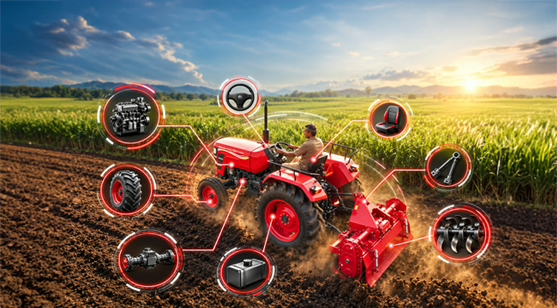
The engine is the working power of a tractor. Horsepower is one of the first numbers buyers often check, but it shouldn’t be the only one.
For heavier-duty operations, consider a tractor with more horsepower. Smaller farms and lighter-duty applications may not need as much power. Also check engine capacity, rated rpm and torque. Tractors need torque to sustain their pulling power when they are engaged in demanding field operations.
No matter what tractor specifications you’re looking at, always put the numbers into the context of the work you actually do on your farm.
Pay Some Attention to the Gearbox
Transmission plays a major role in how a tractor performs different jobs. The type of gearbox and the number of gears available will affect how you control speed and how power gets to the wheels.
Ploughing, cultivation, sowing, hauling and transport can all require different speeds of operation. If you plan to use your tractor for a variety of jobs, opt for a gearbox with good speed options and easy operation.
Don’t Forget Hydraulics
Power is often the first thing that comes to mind, but hydraulics deserve a close look as well. The hydraulic system determines the ability of the tractor to work and lift compatible implements.
Check the hydraulic lifting capacity before you buy, especially if you use equipment such as rotavators, cultivators, seed drills or other heavy implements.
Check Out Comfort and Useful Features
In the farming world, it’s often several hours behind the wheel, so operator comfort shouldn’t be a luxury. Look at the seat, steering, controls, visibility and ease of use.
Check out ground clearance, tyre size and turning radius as well. These details are especially important when working between rows of crops, on uneven ground or in smaller fields.
Selecting a Tractor for Your Farm
Wondering how to choose a tractor? Begin with your farm requirements rather than the biggest horsepower figure. Consider the size of your land, the crops you grow, soil conditions, the implements and the jobs you want the tractor to do.
Also, in your tractor buying guide, you should have information on fuel efficiency, maintenance requirements, service support and spare parts availability. The best tractor for agriculture is the one that works best for your farming operation and the type of farming you do.
Choose Your Tractor With Confidence
There is a good range of reliable tractor solutions for farmers available at Mahindra Farm Equipment, each designed to meet your farming needs. Compare the different models and choose the right tractor for agriculture for your fieldwork.