The Future of Farm Mechanization: Trends Shaping Agriculture
11 May 2026
Agriculture has always evolved with the times. From the earliest hand tools to the adoption of motorised tractors, farming has continually adapted to meet the demands of a growing global population. Today, a new wave of transformation is underway, and agricultural mechanization is at the heart of it.
As farms grow larger, labour becomes scarcer, and food security pressures mount, the need for smarter, faster, and more efficient ways of working the land has never been more urgent. Across the world, farmers, agribusinesses, and governments are turning to technology to bridge this gap.
Precision Agriculture is Redefining the Farm
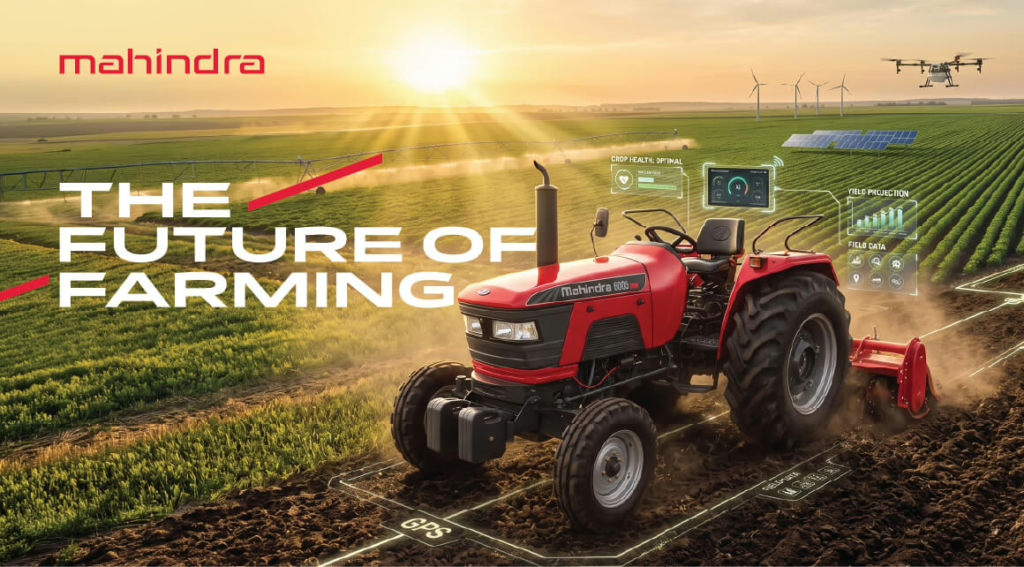
One of the most significant shifts in modern farming is the move toward precision agriculture. Rather than treating an entire field as a single unit, precision farming uses data, sensors, and GPS-guided machinery to manage resources at a highly granular level. The result is less waste, better yields, and lower input costs.
Farm mechanization today goes far beyond simply replacing manual labour. It is about making every decision on the farm smarter and more informed. From soil health monitoring to variable rate seeding, mechanized systems are enabling farmers to do more with less.
Smart Farming Solutions Are Taking Centre Stage
The integration of digital technology with farm machinery is giving rise to a new generation of smart farming solutions. These systems connect tractors, implements, and field sensors through centralised platforms, giving farm operators real-time visibility into everything from fuel consumption to crop performance.
Remote diagnostics, automated steering, and machine learning-based recommendations are no longer concepts of the future. They are being adopted on farms across Asia, Africa, and the Americas, improving both productivity and profitability.
For small and medium-scale farmers in emerging markets, smart farming solutions are particularly transformative. By reducing dependency on skilled labour and minimising guesswork, these technologies are enabling a new generation of farmers to farm with confidence.
Sustainability Is Driving Mechanization Decisions
Modern farm mechanization is increasingly shaped by the need for environmental responsibility. Fuel-efficient engines, electric-powered implements, and reduced tillage equipment are helping farmers lower their carbon footprint while maintaining output levels.
Conservation tillage, enabled by advanced mechanized equipment, preserves soil structure, reduces erosion, and retains moisture. These practices are becoming standard in regions where climate change is making water scarcity and soil degradation pressing concerns.
The Road Ahead
Agricultural mechanization is no longer optional for farms that want to remain competitive. As global food demand rises and arable land becomes increasingly stretched, the ability to produce more from every acre will define agricultural success in the decades ahead.
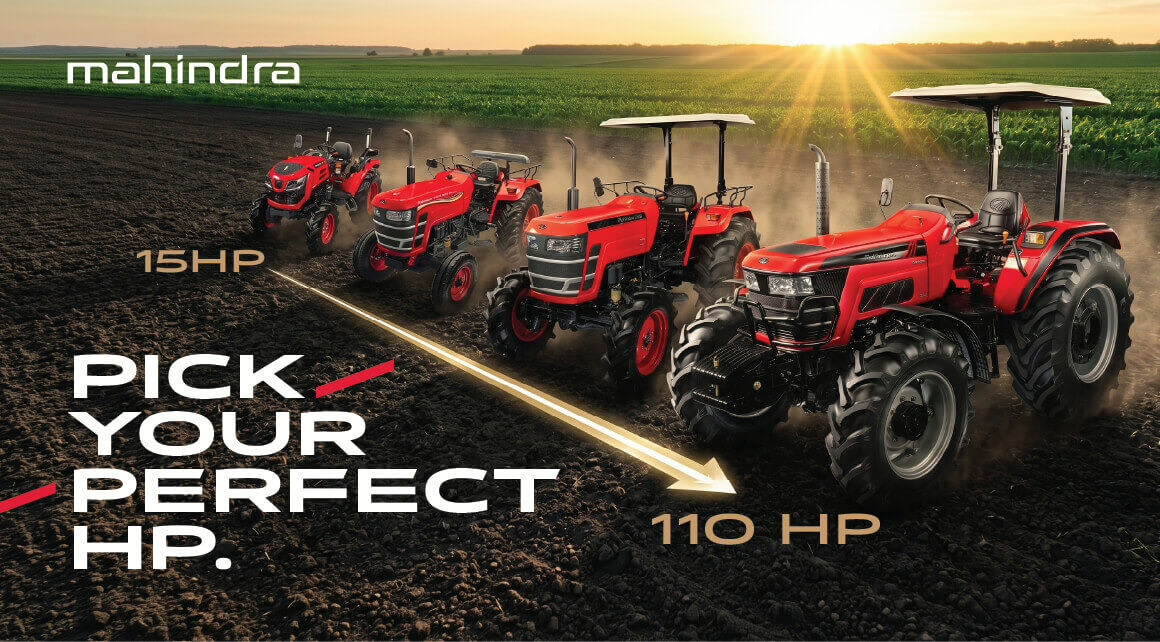
The companies and farmers who invest in the right mechanized solutions today are positioning themselves to lead tomorrow. Whether it is a compact tractor working a smallholding in South Asia or a high-horsepower combine harvester operating across vast fields in Africa, the future of farming is mechanized, connected, and built for performance.
At Mahindra Farm Equipment, we are proud to be part of this journey, delivering farm mechanization and smart farming solutions that help farmers around the world grow more, achieve more, and build more.